
Research Team


Arianna Magnani
Arianna Magnani
Arianna Magnani obtained her PhD from the University of Venice “Ca’Foscari” in 2019; she is currently a researcher in Chinese studies at the University of Enna “Kore,” where she leads the 2022 PRIN Project “M.A.R.E.”, a database on Manuscripts and books from Asia Reaching Europe jointly developed by Enna, Pisa, and Salerno Universities.
Her research interest focuses on early Europe-China transcultural exchanges, and on the transmission of Chinese texts through the mediation of missionaries during Ming and Qing dynasties.
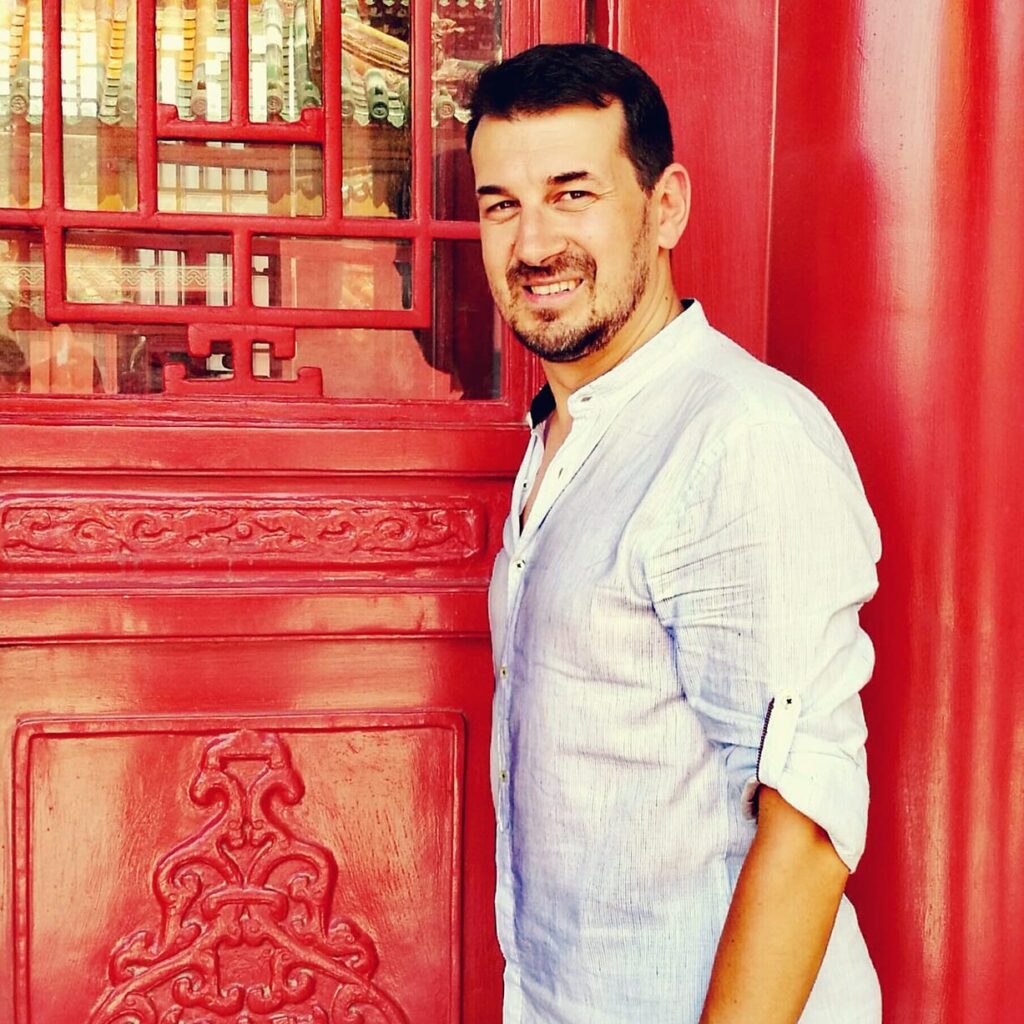
Alessandro Tosco
Alessandro Tosco
Alessandro Tosco earned his PhD in Euro-Asian Studies at the University of Turin, Italy.
He enhanced his proficiency in the Chinese language by attending courses at the Beijing Language and Culture University and East China Normal University in Shanghai. In 2014 he was awarded a scholarship for the “Young Sinologists” programme by Hanban/Confucius Institute Headquarters.
He currently works as an associate professor of Chinese language and literature at the University of Enna Kore and as the Italian Director of the Confucius Institute at Enna. His research primarily focuses on imperial Chinese literature with a specific interest in the theatre of the Yuan dynasty.
Within Cultural Studies, he examines the reception of ancient Chinese thought during the European Enlightenment, particularly through the lens of Jesuit missionary Latin translations of Confucian classics.
In the PRIN M.A.R.E. project, he investigates the dissemination of writings by Jesuit missionaries published in the encyclopaedic work Description de la Chine, edited by Du Halde in 1735, with a focus on sections devoted to Chinese literature.
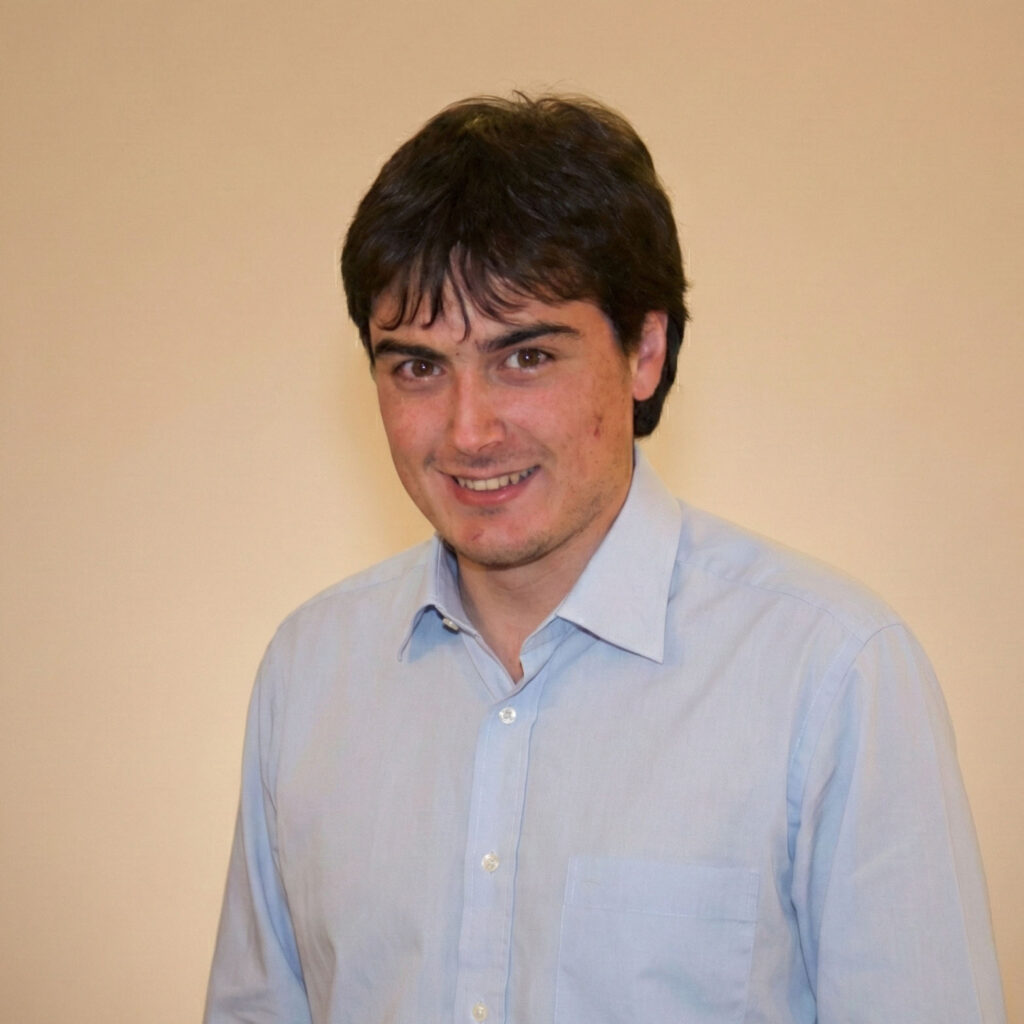
Valerio Mario Salerno
Valerio Mario Salerno
Valerio Mario Salerno is an Associate Professor of Computer Science at the School of Medicine and Surgery, University of Enna “Kore”, Italy, where he directs the STMLab (Laboratory for Speech Technology research and Machine Learning) at the same institution.
He received his Ph.D. in Computer Engineering from the University of Enna “Kore” with a dissertation on adaptation to new microphones using artificial neural networks with trainable activation functions.
His research interests include speech recognition, neural networks, machine learning applications, and AI for health.

Salvatore Sorce
Salvatore Sorce
Salvatore Sorce studied Computer Science and Engineering (“Ingegneria Informatica”) at the University of Palermo, and received his M.S. (2001) and Ph.D. (2006) degrees.
Currently he is permanent and full-time Associate Professor in Information Processing Systems in the Department of Engineering and Architecture, and vice-rector for ICT and Technological Transfer, at the Università degli Studi di Enna “Kore” (Italy). He teaches “Object-Oriented Programming” and “Digital Representation and Processing” at the BSc, and Human-Centred AI and “Vulnerability of Systems and Networks” at the MSc.
His contribution in the M.A.R.E. project is in data representation, information visualisation and usability.

Srushti Goud
Srushti Goud
Srushti Goud is a cultural heritage researcher, architect and art-lover from India. She completed her Bachelor of Architecture from M S Ramaiah Institute of Technology, Bangalore, Karnataka, India in 2013.
In 2015, she completed International Master’s in Interior Architecture and Design (History, Theory and Criticism) from CEPT University, Ahmedabad, India. She recently completed her PhD from the University of Turin, Italy, on the topic ‘Value Communication for Cultural Heritage: Operational Workflow for Digital Environments’.
She wishes to bridge the gap between the research and practice of heritage communication and is currently a Postdoctoral Fellow at the Kore University of Enna on the project “M.A.R.E.: Manuscripts and books from Asia Reaching Europe.
A semantically enhanced digital library mapping Asian books circulation along the Silk Maritime Routers”.
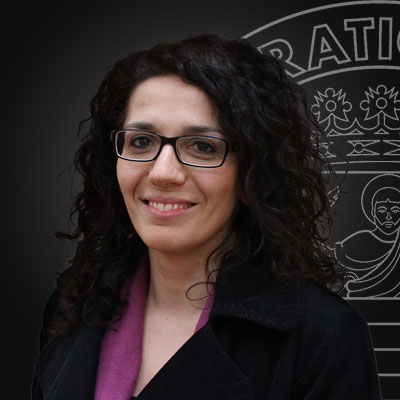

Sabrina Senatore
Sabrina Senatore
Sabrina Senatore is a Full Professor of Computer Science at the University of Salerno, Italy. She co-chairs the IEEE CIS Task Force on Intelligent Agents (IEEE-TFIA).
Prof. Senatore holds editorial positions in prominent international journals, including Senior Editor for Expert Systems with Applications (Elsevier) and Executive Editor-in-Chief for Information Sciences (Elsevier). She has published extensively in leading international conferences and journals and has served as an organizer and program committee member for numerous conferences.
Her research focuses on the development and application of intelligent systems that integrate methods from Computational Intelligence, Artificial Intelligence, Information Retrieval, Knowledge Graphs, the Semantic Web, and Intelligent Agents.
She is also involved in several national research projects. In the PRIN MARE project, she is responsible for the ontological modeling of the ancient manuscript collection, contributing to the development of a semantic search engine integrated with a web-based interface for search functionality.


Luisa Andriollo
Luisa Andriollo
Luisa Andriollo is a research fellow in Byzantine studies at the University of Pisa. She has held fellowships at the Universities of Princeton and Bamberg, and from the Gerda Henkel Foundation.
Her research focuses on the administrative and social history of Byzantium, particularly on aristocratic society and culture of the 8th-12th centuries; more recently, she has extended her investigations to interreligious debates and cross-cultural exchanges.
Her publications include the monograph Constantinople et les provinces d’Asie Mineure, IXe-XIe siècles (2017) and Byzantium and Its Neighbours: religious Self and Otherness in Dialogue (2024), co-edited with Luigi D’Amelia.
As part of the M.A.R.E. project, she studies the production of Byzantine anti-Islamic polemical works in the 12th-13th centuries and their circulation between the Levant and Europe.
She is also looking at other textual genres (letters, diplomatic documents) as evidence of the existence of extensive social and cultural networks between the Byzantine East and Italy.

Marco Battaglia
Marco Battaglia
Marco Battaglia teaches Germanic Philology and Nordic Literatures at the University of Pisa. His research interests focus on the relationship between so-called “barbarians” and classical civilization, Germanic mythology, Old Norse literature, the Nibelung–Volsung tradition, medievalism, and the reworking of ancient myths as a tool for constructing national identity.
Among his publications related to the themes of the project are:
“gens belligera et efferra. L’insostenibile leggerezza dell’ethnos nella diaspora vichinga,” in Lingua, etnia e identità nel mondo germanico, edited by V. Santoro (Rome: Rubbettino, 2018), 141–173; and
“Identity Paradigms in the Perception of the Viking Diaspora,” in Viaggi per scene in movimento – Journeys through Changing Landscapes, edited by F. Fedi and C. Dente (Pisa: Pisa University Press, 2017), 279–316.
His most recent books include Snorri Sturluson. Edda (Milan: Meltemi Editore, 2021) and Edda poetica: mito, eroismo e tragedia nel Medioevo scandinavo (Milan: Meltemi Editore, 2025).
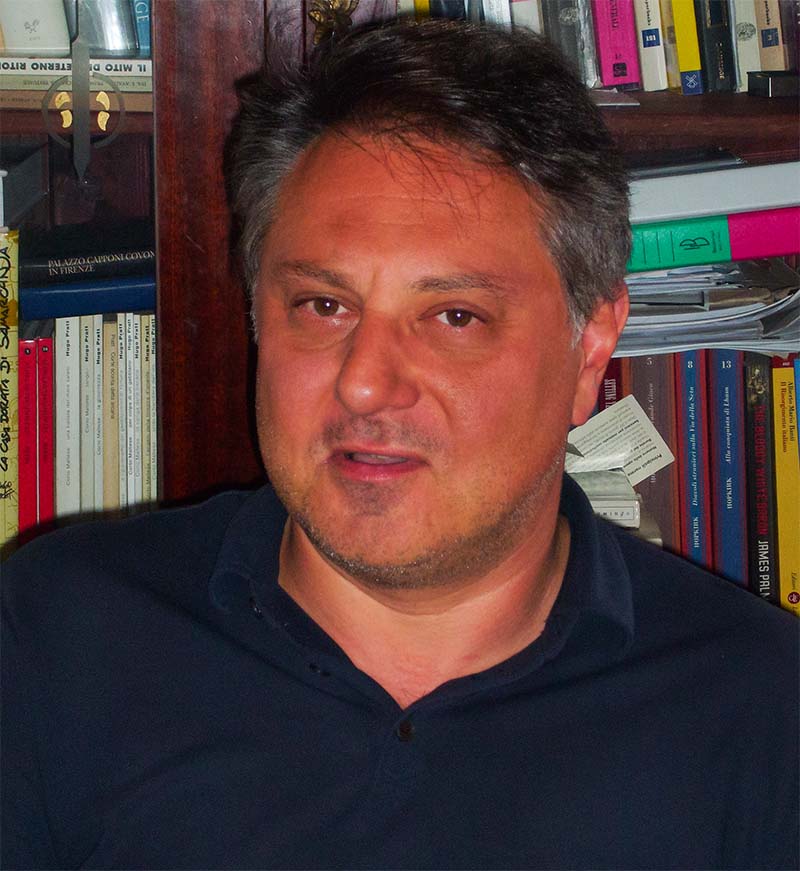
Andrea Nuti
Andrea Nuti
Andrea Nuti is a historical linguist specializing in Indo-European, Latin, and Celtic languages. He earned his degree from the University of Florence and his PhD from the University of Pisa. As a postgraduate student, he studied Celtic languages at Trinity College Dublin and has spent extended research periods in Celtic-speaking areas of Ireland.
He has participated in numerous national and international research projects, including PRIN-funded initiatives and a long-term international research group (2002–2010) supported by the U.S. National Science Foundation, the Rockefeller Foundation, the Diebold Foundation, and the Salus Mundi Foundation. The results of this project were published in Towards a New Historical Syntax of Latin (Berlin–New York: Mouton de Gruyter, 2009–2011).
He is currently Associate Professor at the University of Pisa, where he teaches General Linguistics, Latin Linguistics, and Celtic Philology. His research interests include syntax, lexicon, and semantics—most notably Latin diachronic semantics, as explored in his monograph Ludus and iocus: Pathways of Playfulness in the Latin Language—as well as etymology and cultural reconstruction. In the field of Celtic studies, he has published extensively on Celtic epigraphy, Welsh phonetics, Old Irish syntax, epic textual analysis, and etymological research. His current work focuses on the historical and philological study of Celtic cultures between Late Antiquity and the Middle Ages.
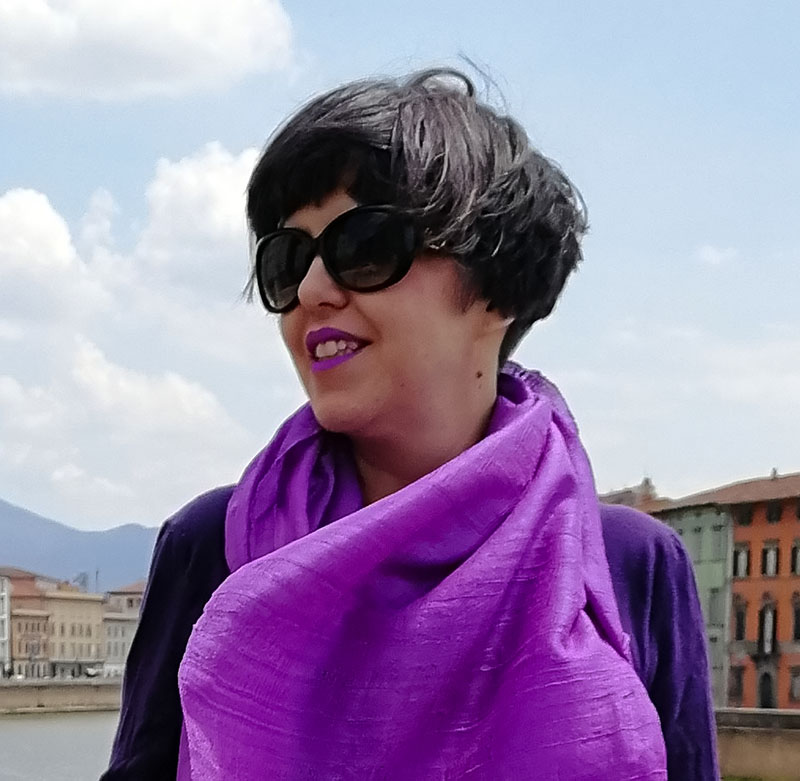
Chiara Ombretta Tommasi
Chiara Ombretta Tommasi
Chiara Ombretta Tommasi is a former student of the Scuola Normale Superiore of Pisa (1991–95) and holder of a PhD in Classical Philology (2000), teaches History of Religions and History of Early Christianity at the University of Pisa.
Her main research interests focus on Late Antiquity, with particular attention to the dialectic between pagans and Christians, the presence of esoteric currents, and the relationships with other cults of foreign origin within the Mediterranean religious landscape. In recent years, she has broadened her research horizons to include the interactions between classical civilizations and the Far East, coordinating with Andrea Balbo the “SERICA, Sino-European Religious Intercations in Central Asia. Intelligent Networks”, project. She is currently preparing a commented edition of China Illustrata by Athanasius Kircher. In 2024, a volume entitled Religions: A Global History was published by Le Monnier/Mondadori Education.
She is a member of numerous scientific committees (Axolotl. Collana di Storia delle Religioni at Mimesis, Milan/Udine; Documenta Orientalia, Pacini, Pisa; PLUS, Pisa University Press; Roma Sinica and Millennium, De Gruyter, Berlin; Religion, Routledge; Religeographies, Fondazione Cini; Religions in the Roman Empire, Tübingen). She serves as Vice-President of the EASR (European Association for the Study of Religion); is a member of the Laboratoire sur les Monothéismes of the French CNRS; of the Executive Board of the Institut d’Études Augustiniennes in Paris; and of the Academia Europaea in London.